top of page
PHOTO ESSAY
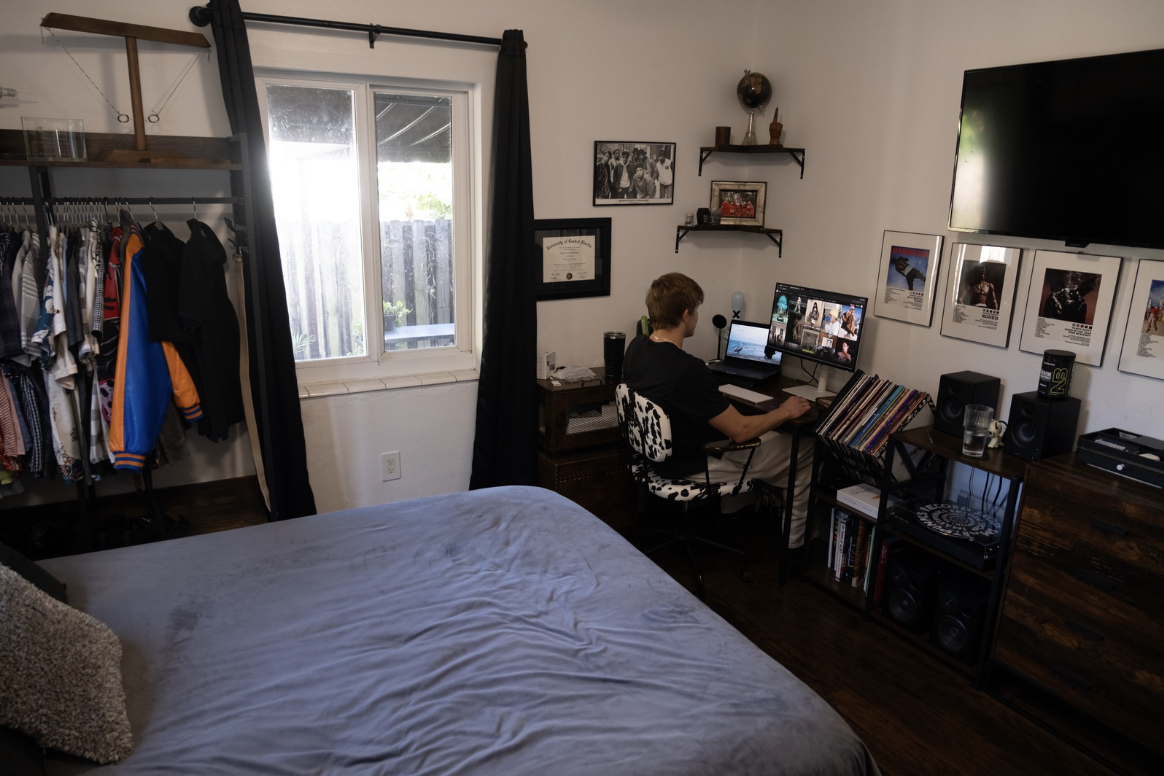
This photo series follows a day in the life of Bryson Bejerano, a director, editor, and recent UCF Film School graduate, highlighting his daily routine and creative process.

01
According to GUDSHOW, Video Editing and AI have been around since 2010, starting with simple features like scene detection to advanced AI video editing, which allows video editors to create full videos with prompt text and realistic avatars that resemble real life video productions. Bryson Bejerano has been video editing for over 8 years, and has adapted to AI integration and advancement in video editing.

02
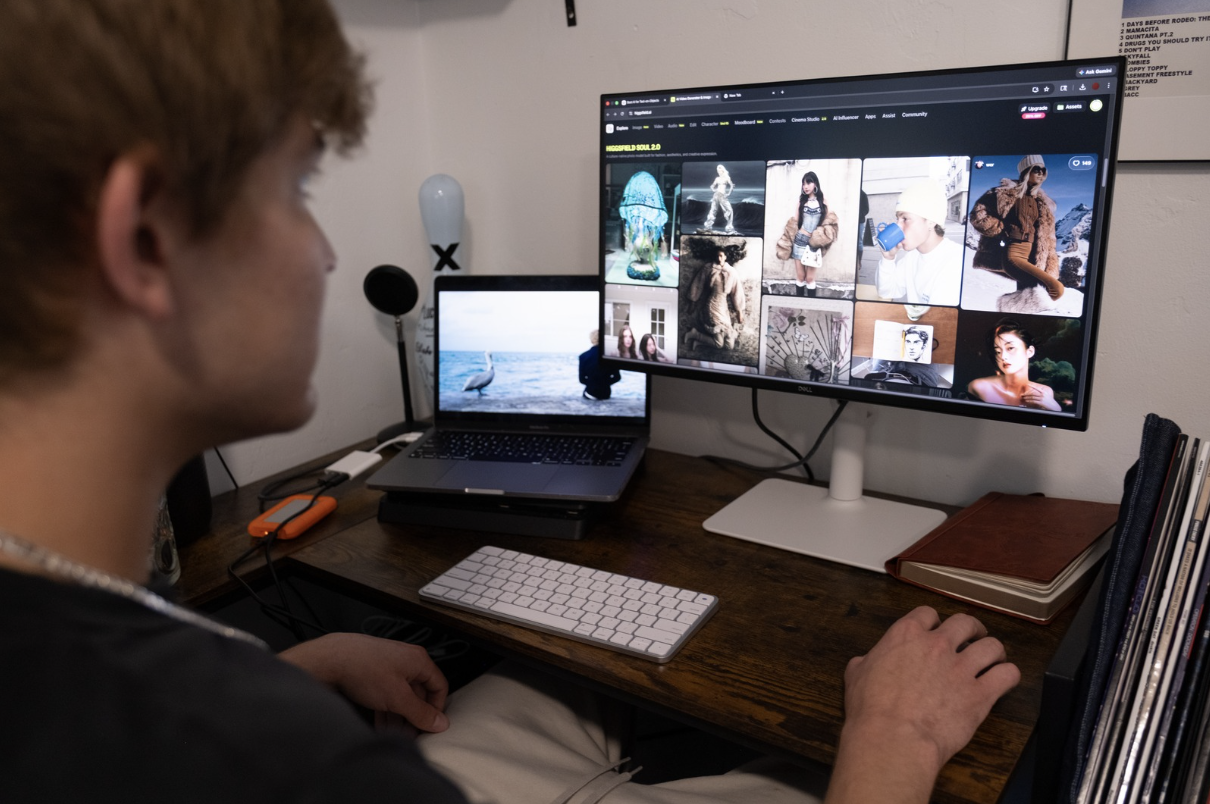
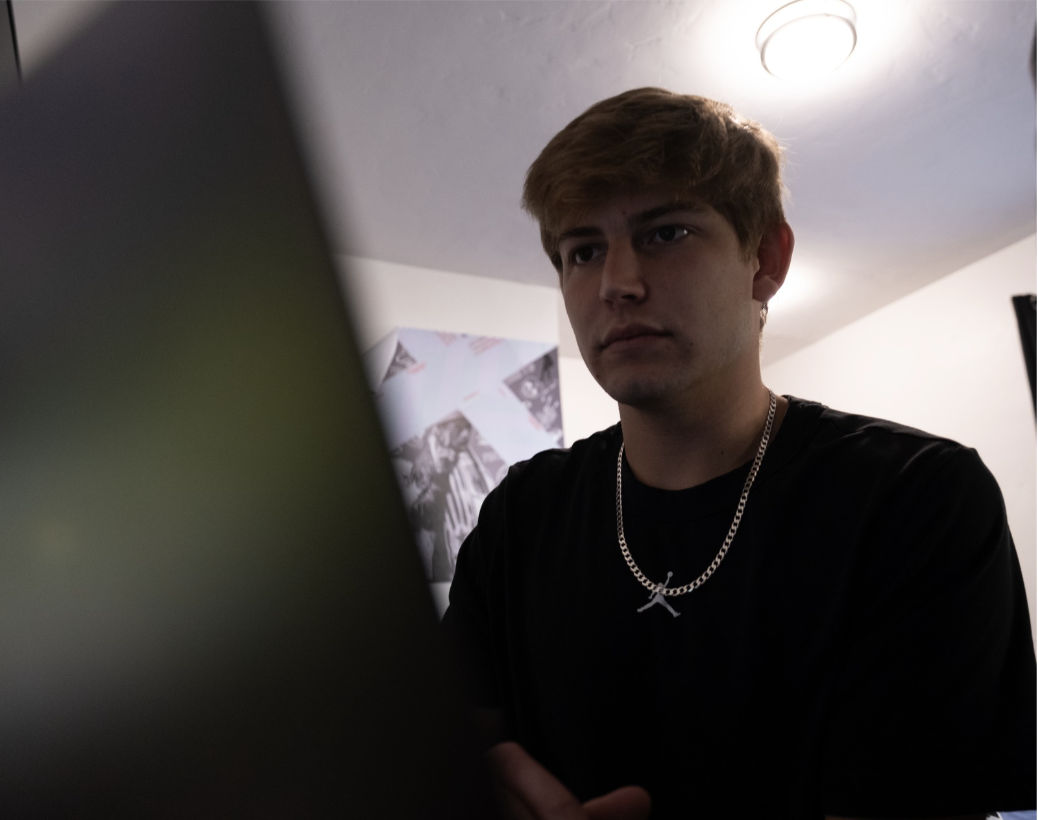
Bryson scrolls through Higgsfield AI, browsing it’s library of visual effects and transitions to explore what styles and techniques could enhance the project. Higgsfield AI was founded in 2023 and is a generative AI platform used for creating cinematic, short-form videos from text, images, and links.

03
Bryson works with AI tools, but also keeps his traditional techniques while editing his videos. Bryson said using AI allows him to speed up the editing process. According to a study done by ElectroIQ in November, 2024, editing software like Canva: an AI Photo and Video Editor, was installed 1.16 million times. Showcasing a trend amongst digital creators using more AI tools for easy and accessible editing.

04
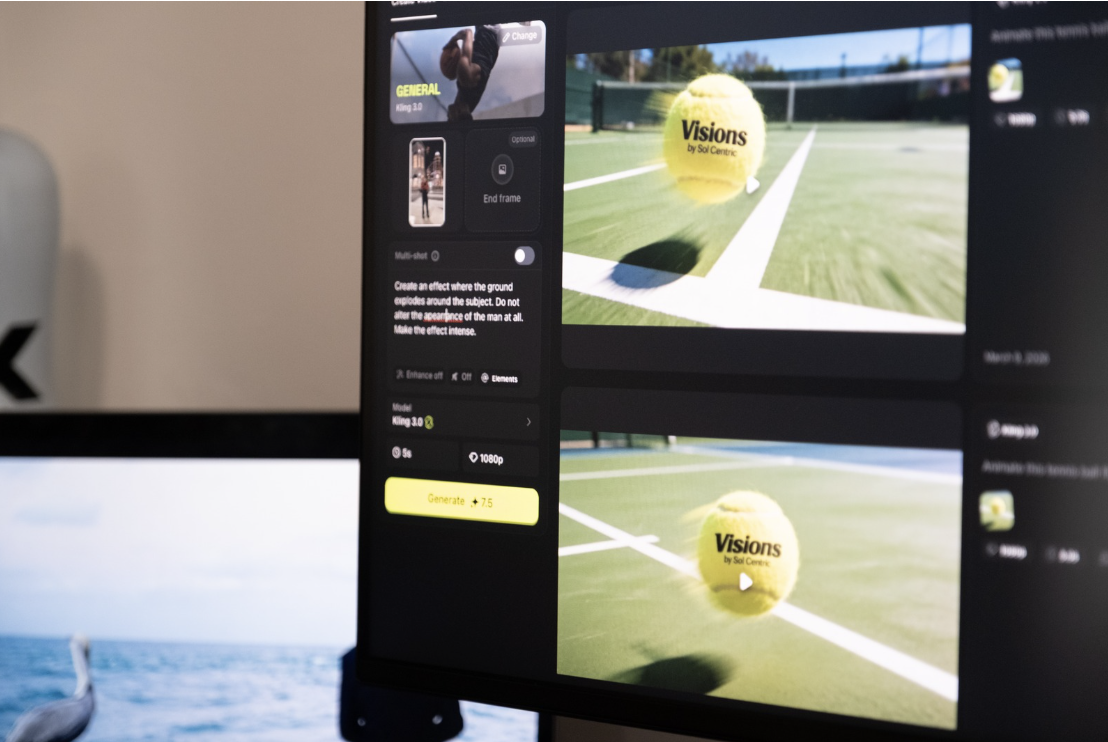
Half of Bryson's work focuses on creating AI-generated visual effects that enhance the overall look and creativity of his video projects. He uses AI tools to design unique visuals and experiment with artistic styles to improve the visual quality of his videos.

05
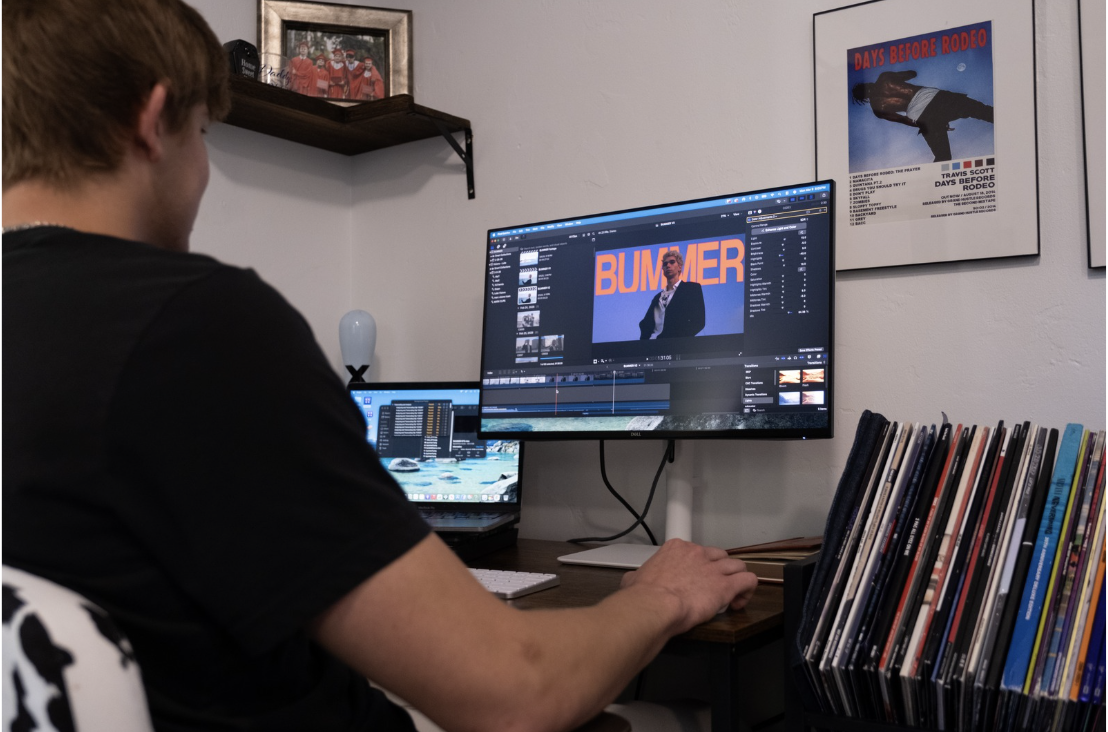
In addition to creating visuals, Bryson uses AI systems to generate multiple variations of the same effect or scene so he can compare different outcomes. After choosing the strongest visuals, he intergrates them inot his main video project using Final Cut Pro to ensure AI visuals blend smoothly with the rest of his footage.

06
Bryson starts to use a website that focuses on film production from real directors and production companies that highly contrasts the AI generated imagery which helps discover more unique ideas to Bryson.

07
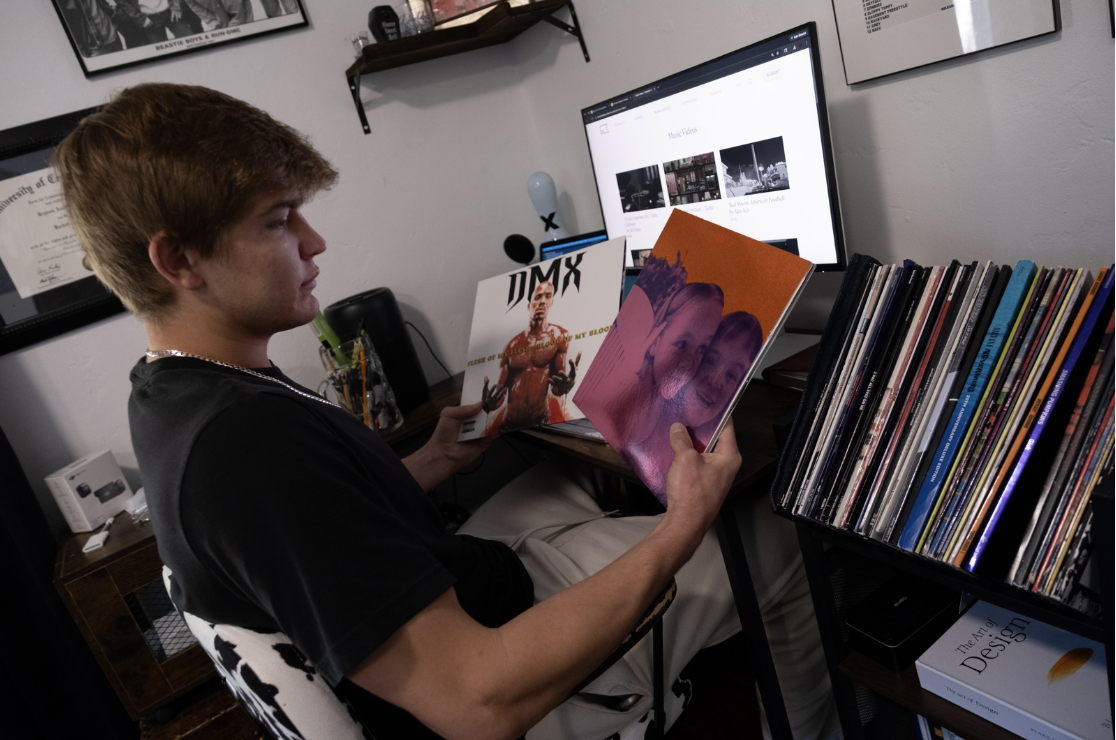
Bryson often turns to his personal collection of curated vinyl records when he needs creative inspiration. The albums represent music created by real teams of artists, producers, and designers. They remind him of the storytelling and collaboration behind past creative work. By exploring the sounds, artwork, and histroy behind these records, Bryson finds ideas that influence the style and direction of his own video proejcts.

08
According to study conducted by Vision Center, nearly 65% of adults report experiencing some form of digital eye strain due to spending long periods of time on computers and digital screens. This statistic highlights how common eye fatigue has become in modern digital workflows.

09
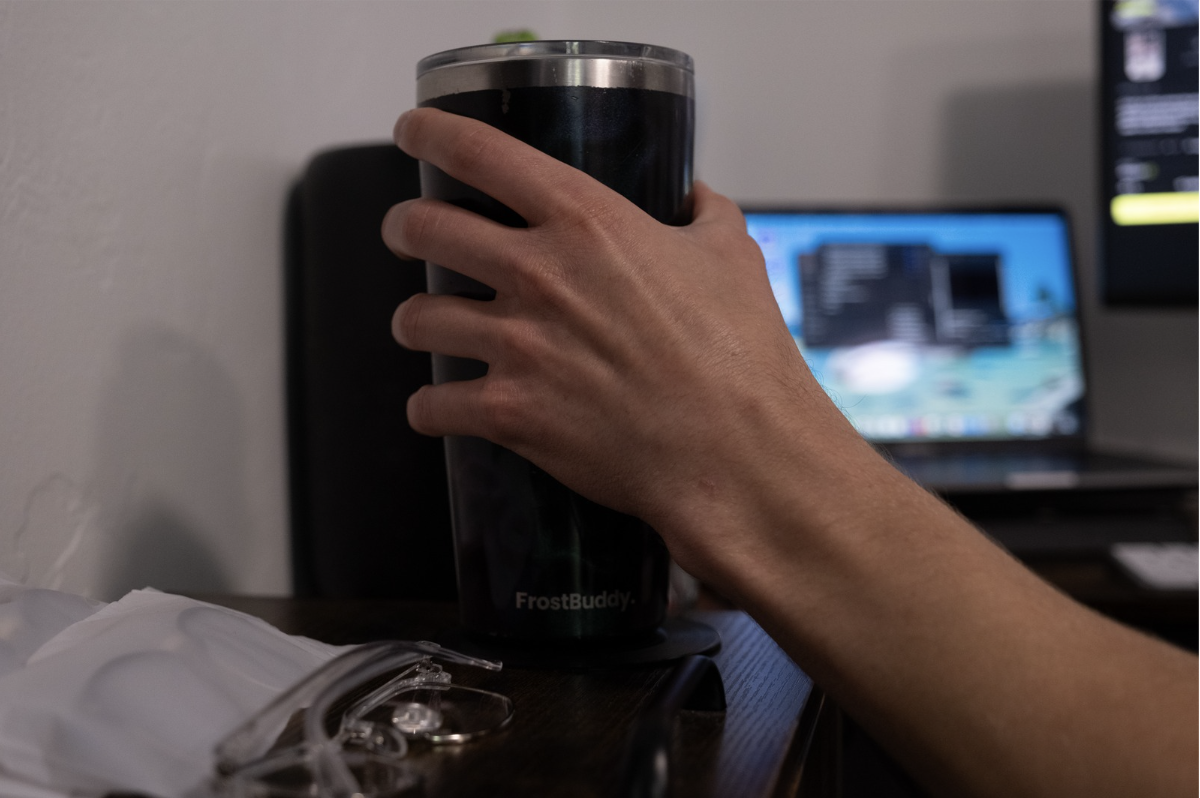
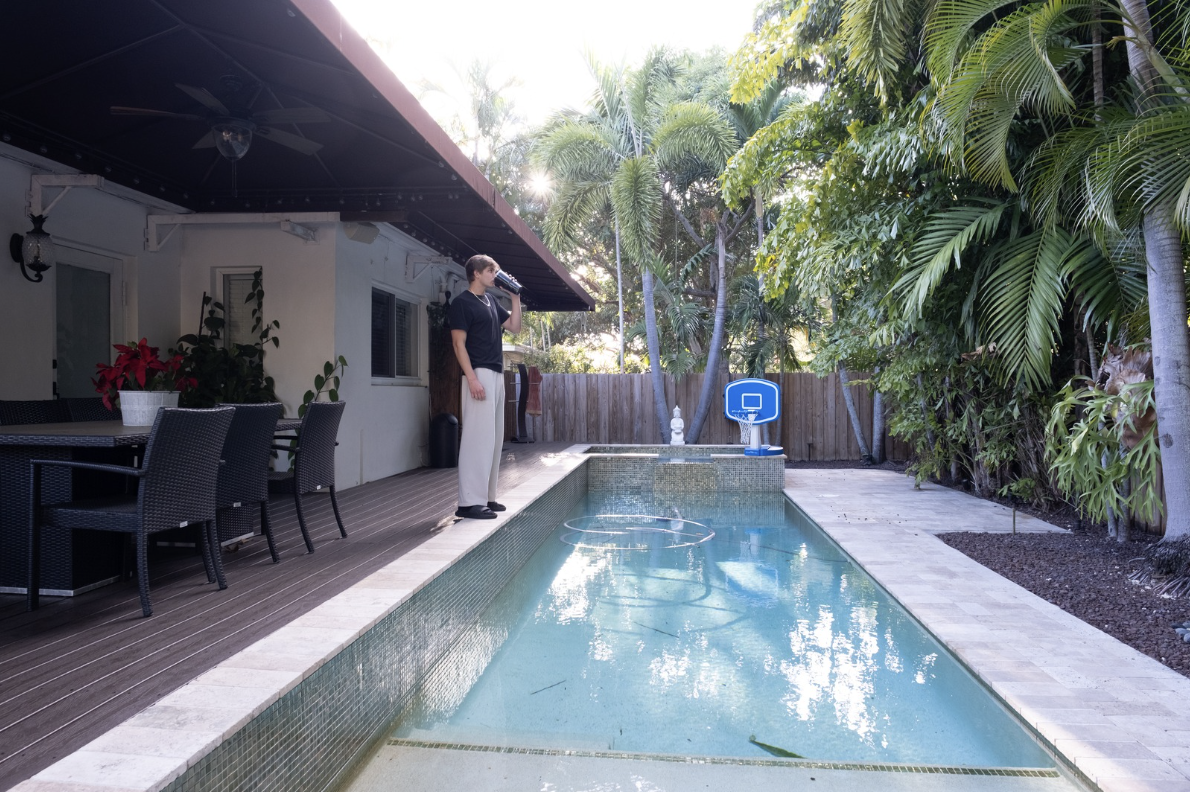
Bryson usually takes breaks while editing his videos, giving himself time to clear his thinking and rest his eyes after long sessions working with AI tools. These short breaks help him stay focused and maintain his productivity during extended editing periods.

10
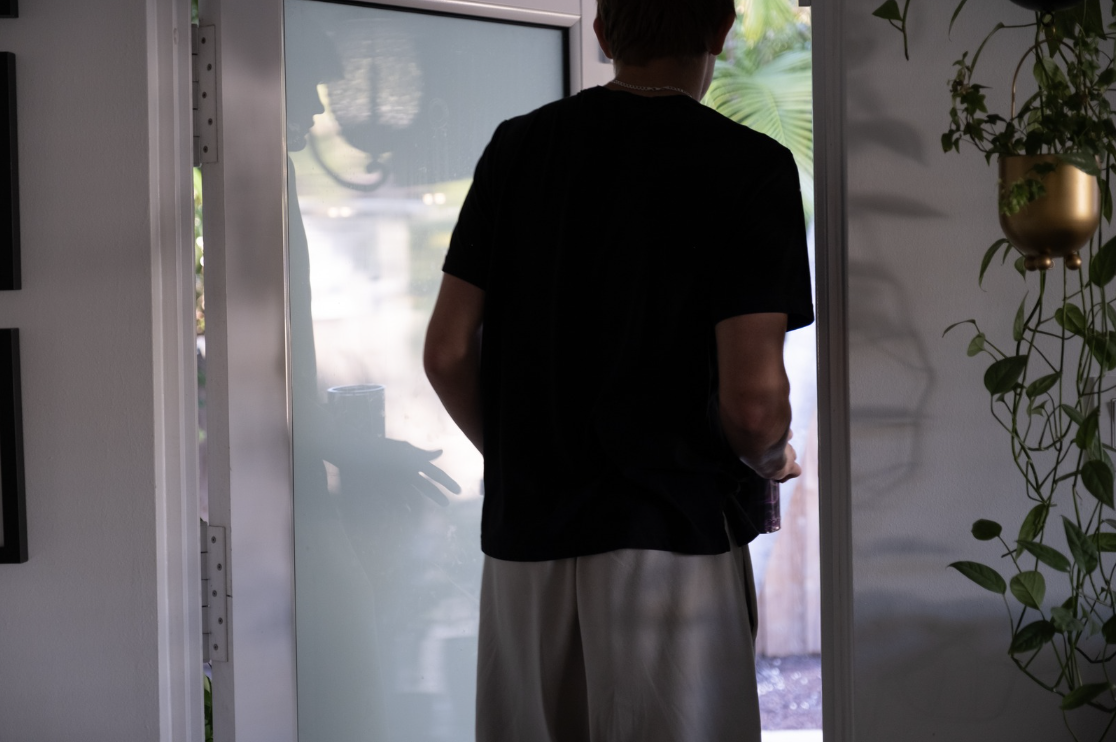
By doing this, Bryson connects with real-world inspiration that helps him stay creative outside of his digital workspace. These moments allow him to step away from screens and observe ideas that come from everyday experiences.

11
This balance allows Bryson to manage his work as a video editor while adapting to the growing role of AI in the creative process. Drawing from real-world influences helps him stay grounded in human creativity while still embracing the technological tools that support his workflow.

12
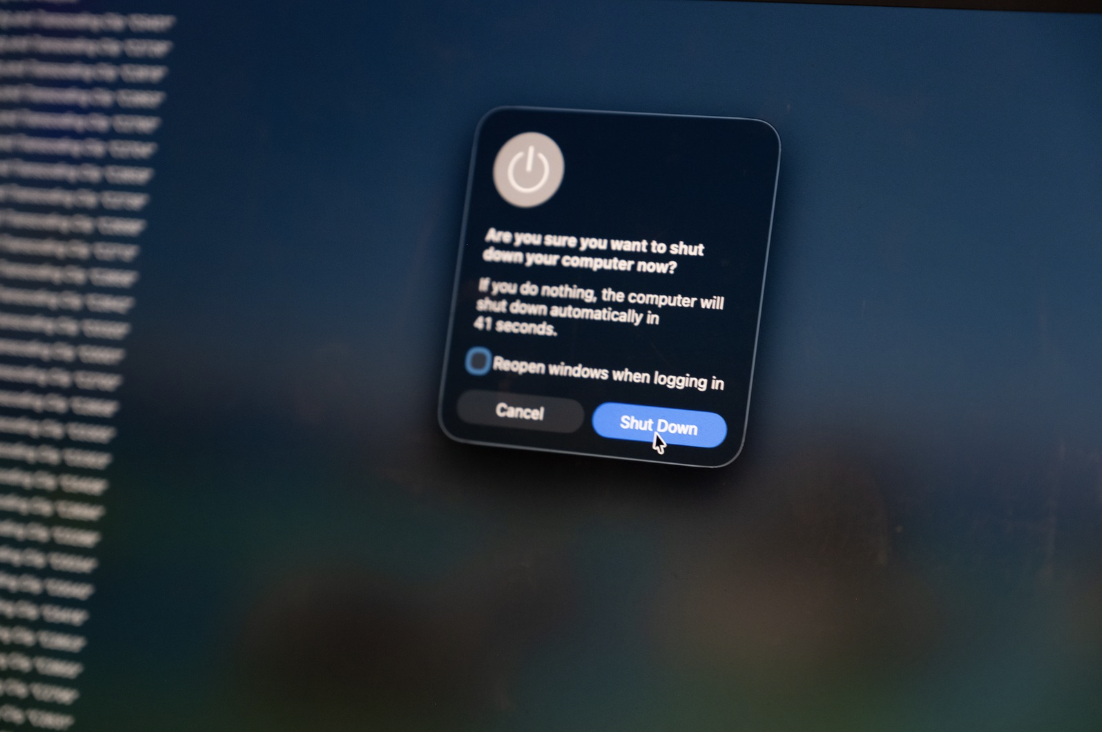
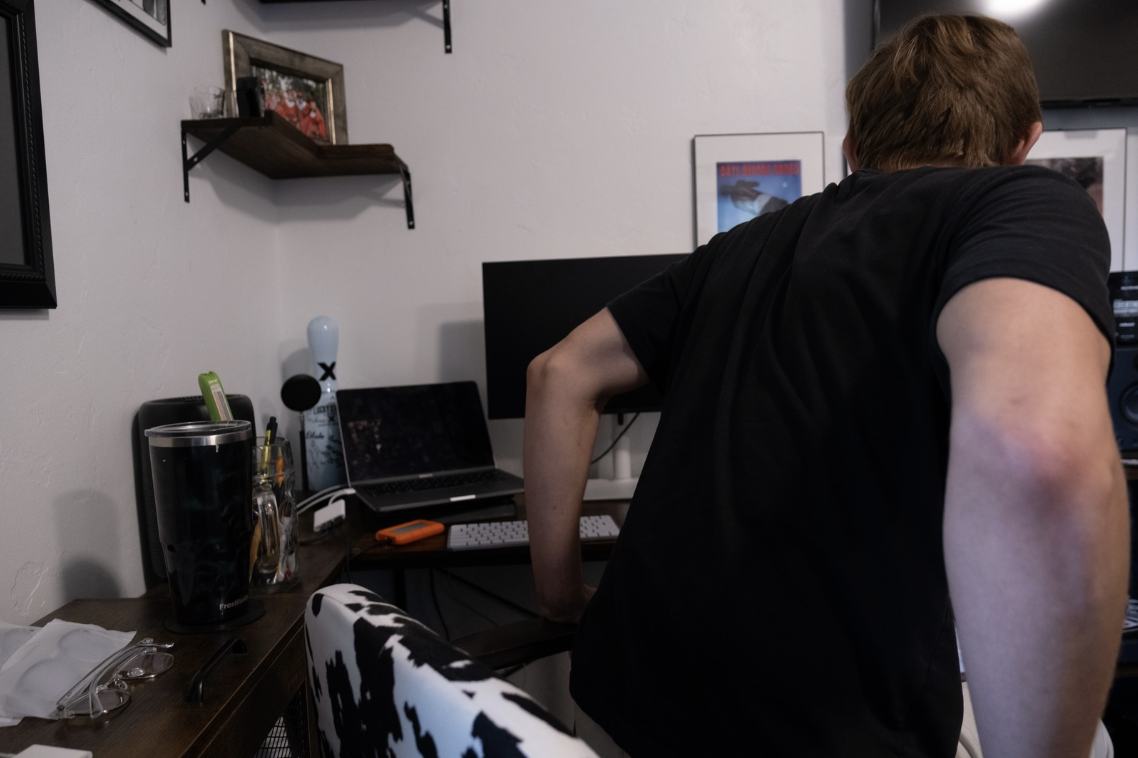
After spending hours editing and researching inspiration for the video, Bryson finally steps away from the computer to clear his mind and return with a fresh perspective on the project. From Bryson’s perspective AI helps speed up about 70% certain tasks and spark ideas, but he still spends time making the creative decisions.
01 / 12
According to GUDSHOW, Video Editing and AI have been around since 2010, starting with simple features like scene detection to advanced AI video editing, which allows video editors to create full videos with prompt text and realistic avatars that resemble real life video productions. Bryson Bejerano has been video editing for over 8 years, and has adapted to AI integration and advancement in video editing.
01
According to GUDSHOW, Video Editing and AI have been around since 2010, starting with simple features like scene detection to advanced AI video editing, which allows video editors to create full videos with prompt text and realistic avatars that resemble real life video productions. Bryson Bejerano has been video editing for over 8 years, and has adapted to AI integration and advancement in video editing.
02
Bryson scrolls through Higgsfield AI, browsing it’s library of visual effects and transitions to explore what styles and techniques could enhance the project. Higgsfield AI was founded in 2023 and is a generative AI platform used for creating cinematic, short-form videos from text, images, and links.
03
Bryson works with AI tools, but also keeps his traditional techniques while editing his videos. Bryson said using AI allows him to speed up the editing process. According to a study done by ElectroIQ in November, 2024, editing software like Canva: an AI Photo and Video Editor, was installed 1.16 million times. Showcasing a trend amongst digital creators using more AI tools for easy and accessible editing.
04
Half of Bryson's work focuses on creating AI-generated visual effects that enhance the overall look and creativity of his video projects. He uses AI tools to design unique visuals and experiment with artistic styles to improve the visual quality of his videos.
05
In addition to creating visuals, Bryson uses AI systems to generate multiple variations of the same effect or scene so he can compare different outcomes. After choosing the strongest visuals, he intergrates them inot his main video project using Final Cut Pro to ensure AI visuals blend smoothly with the rest of his footage.
06
Bryson starts to use a website that focuses on film production from real directors and production companies that highly contrasts the AI generated imagery which helps discover more unique ideas to Bryson.
07
Bryson often turns to his personal collection of curated vinyl records when he needs creative inspiration. The albums represent music created by real teams of artists, producers, and designers. They remind him of the storytelling and collaboration behind past creative work. By exploring the sounds, artwork, and histroy behind these records, Bryson finds ideas that influence the style and direction of his own video proejcts.
08
According to study conducted by Vision Center, nearly 65% of adults report experiencing some form of digital eye strain due to spending long periods of time on computers and digital screens. This statistic highlights how common eye fatigue has become in modern digital workflows.
09
Bryson usually takes breaks while editing his videos, giving himself time to clear his thinking and rest his eyes after long sessions working with AI tools. These short breaks help him stay focused and maintain his productivity during extended editing periods.
10
By doing this, Bryson connects with real-world inspiration that helps him stay creative outside of his digital workspace. These moments allow him to step away from screens and observe ideas that come from everyday experiences.
11
This balance allows Bryson to manage his work as a video editor while adapting to the growing role of AI in the creative process. Drawing from real-world influences helps him stay grounded in human creativity while still embracing the technological tools that support his workflow.
12
After spending hours editing and researching inspiration for the video, Bryson finally steps away from the computer to clear his mind and return with a fresh perspective on the project. From Bryson’s perspective AI helps speed up about 70% certain tasks and spark ideas, but he still spends time making the creative decisions.

bottom of page